

WARNING !!! DEADLY SWIMMING MOLDS
KNOWN AS CHYTRIDS INVADE CROPS
ONE MILLION PEOPLE STARVE TO DEATH.
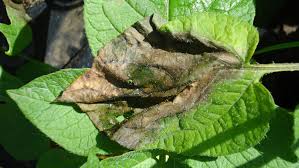
Ok I know the title is a bit over the top, but in a strange way it is very true. Many swimming molds or chytrids live in and swim through the thin film of water on wet plant leaves and ruin many important crops during extra wet growing seasons. These molds often have a very negative effect on agriculture and one type in the phylum Oomycota are directly responsible for the deadly Irish Potato Famine.
This famine caused the death of one million Irish people and caused millions to emigrate from Ireland including the ancestors of Al McNamara
of Abode Inspections.
Al MacNamara was one of America’s first American Society of Home Inspectors certified home inspectors. Originally from Boston he was my mentor and taught me how to do home inspections back in 1993 when he was an inspector in Delray.
Home inspections is what led me to my current career in mold inspection as owner of A Accredited Mold Inspection Service.
About the Irish Potato Famine
Great Famine or the Irish Potato famine
From 1845 to 1852 approximately one million Irish people died and one million migrated to other countries due to a mold or mildew type organism, scientific name Phytophthora infestans. This organism ruined potato crops that was the primary food source for people in Ireland at the time.
You would think people would just eat other foods if the potatoes were all infected with fungus. However, it is not that simple.
At that time the people of Ireland were depended largely on potatoes as a primary food source.
In addition, middlemen who worked for the landlords were corrupt and greedy and took advantage of the impoverished peasant farmers. They were often too poor to afford to buy other foods so they depended on what they grew.
To make matters worse, Ireland was ruled by the British who implemented systems that benefited the British and kept the Irish poor. For example, if the land was improved by the Irish, they and their families and descendants did not benefit. Only the British would benefit.
The peasants of Ireland lived on small plots of farmland owned by wealthy landlords who lived in Britain, mostly in London England. Just about the only food crop that was productive enough to produce adequate amounts of food on such small plots of land with poor soil were potatoes. So, the people grew potatoes and ate potatoes on small plots of land with poor soil day after day.
The worst part is that large amounts of food that the Irish should have used as alternative foods were exported from Ireland to Britain during the famine. England benefited and Ireland starved. London refused to bar these food exports.

IN FEBRUARY 1845, DEVON REPORTED:
“It would be impossible adequately to describe the privations which they [the Irish labourer and his family] habitually and silently endure … in many districts their only food is the potato, their only beverage water … their cabins are seldom a protection against the weather … a bed or a blanket is a rare luxury … and nearly in all their pig and a manure heap constitute their only property.”
WHY DID PEOPLE LIVING ON AN ISLAND NOT EAT FISH?
Some along the coast had small boats and fishing gear. They were poor tenants on the land and could not afford to pay rent when potato crops died. Thinking things would get better the next year, they would often sell their boats and fishing gear to avoid eviction.
Source: wikipedia.org
THE MORAL TO THE STORY
God set the fungus but it was greedy British policy that turned it into a famine. The moral is not that colonial British government was evil. Every people and government in the world seems to take advantage of the weak and poor when given the chance to conquer, colonize, or enslave them. The British are no different they all peoples in that regard. The moral that we can learn from this history is that greed is evil no matter who perpetrates it. The above history teaches us that Jesus was pretty wise when he said that the love of money is the root of all evil.
MORE ABOUT CHYTRIDS
Some mold like Chytrids make their homes in moist frog skin and cause a deadly disease that has been decimating frog populations around the world for several decades now. While others cause a common fuzzy white growth of mold on tropical fish.
These molds, in at least some stages of their complex life cycles propel themselves through water with the aid of tiny whip like structures called flagella. Flagella are those long whip-like structures that are found on some cells such as sperm cells and are one celled plant like Eugenia protozoans which push themselves through water.
In his book The Fifth Kingdom Dean Kendrick noted mycologist ( mold biologist ) discusses three phylum (large groupings) of swimming molds.
1) PHYLUM CHYTRIDIOMYCOTA
The first group is known as Chytridiomycota. These are true fungi and they have a single flagellum at the rear of the cell, this flagellum propels the mold cell through the water just like the flagellum at the rear of a sperm cell propels sperm cells. Around 1998, Joyce Longcore determined that a type of Chytridiomycete mold was causing the death of many frogs around the world by infecting their skin. You may not have heard of it but widespread frog deaths have been a serious concern for decades now. I remember my zoology teacher talking about it in 1984 but exactly what was killing frogs was a mystery back then.
2) PHYLUM HYPHOCHYTRIOMYCOTA
The 2nd group that Dean goes on to discuss is the kingdom Chromista phylum Hyphochytriomycota. They have a single harry flagellum at the front. Though similar to the above molds, these are not true molds.
3) PHYLUM OOMYCOTA
The third group is the kingdom Chromista phylum Oomycota, they seem to be split and cannot make a clear decision on if it is better to have one smooth flagellum at the rear or to have a harry one at the front, so the Oomycetes have opted for two flagella at the side. One of the two is a harry flagellum that points to the front and the other is a smooth one that points to the rear.
Oomycetes make up the water molds that cause many common fungal infections in fish including tropical aquarium fish. They also cause downy mildew that cause serious crop damage around the world every year. Most importantly Oomycetes caused the Irish Potato Famine.
Some of the above organisms have a flagellum during their reproductive state only while a few exist as a single celled flagellated mold it’s entire life. Most of the above live in water, moist soil, or in the thin film of water on wet plant leaves. A few even live on the surface of single grains of flower pollen. Obviously, none of the above water molds are common in moldy homes. However, it is interesting to understand that these microscopic molds swim and cause serious negative impacts on humans, plants, and animals around the world.
 A Accredited Mold Inspection Service

If you are looking for a mold inspector in South Florida give is a call.
1-888-381-6651.